Tuesday, 4 December 2012

Film Four - Facts


Film4 was originally known as Film four when established in 1998 as channel 4’s second channel but was for subscription only.

  • Channel 4 is a production house company, who's funding comes from adverts/commercial funding.
  • FILM 4 - "committed to enhance the British film making industry by nurturing and funding new talent"
  • Film 4 has a niche (very specific small audience)
  • It was then followed by many other channel 4 further programmes who time shared the air of blockbuster films.
  • In 2006 film four modified its name to Film4 and also became a free digital viewing channel and started producing many adverts with celebrities in weird situations to stress and intrigue the audience that this is the only channel to watch free movies continuously.
  • Tessa Ross became the Controller of film4 in 2004 and head of TV drama for Channel 4. 
  • Film4 is very heavily linked with Channel 4. Channel 4 financed in the helping of production in such films as “The Crying Game” and “Madness of King George”. Channel 4 also decided that there side film channel would be made free on digital networks, therefore becoming the only free film program to boost ratings. 
  • Film 4 are currently on some large projects including Tyrannosaur, which Film4 backed in production and distribution closely working with Warp X and Inflammable films. This movie is an example of how Film4 help broadcast and produce English films and not just Hollywood Blockbusters as this was the first film ever to be directed by Paddy Considine. Also Film4 are in the final stages of distributing their own creation of Random originally a theatre play by director Debbie Tucker Green. It is being regularly advertised on channel 4 and competitions have started to try and attract people to see the film in cinemas.
  • Film 4 produces about 6 films a year and works along their subsidiary Warp X
  • Less of the budget is spent on distribution, because the films can be advertised on their own and parent companies TV channels.
  • They have won 5 Oscars in 4 years & 3 BAFTA's in 2007. 8.3 million AB Cl's a month, with an upmarket (42%) and male (55%) profile.
  • Successful Films include - Slumdog Millionaire/127 Hours/Four Lions/This Is England/Trainspotting
  • Film 4 work closely with specific actors and directors such as Danny Boyle's/Martin McDonagh/Steve McQueen/Peter Mullan/Chris Morris
  • Film 4 recently launched Film 4.0 - digital/online arena
  • Film 4.0's aim will be to find new talent and discover new ways of making, marketing and distributing films and engaging new audiences online in a multi platform environment.
    Films:
    • Johhny English - It was wrote in 2009, worte by the same people of James Bond which grossed $160 million. Rowan Atkinson starred and the sequal was released in september 2010.
    • Wild-Child - Budget of $20 million. Filmed at Cobham Hall. Was marketed on radio stations, social networking sites and TV adverts - was a financial flop with 2.2 mill opening weekend.
    • The Soloist - Based on true Story. Budget $60 mill. Based on books and articles/directed by Joe Wright. Produced by Gary Foster & Russ Krasnof. Grossed $31,720,158 mill. Paramount helped distribute through Dreamworks animation and Universal Pictures. Released a year later than planned, therefore lost oscar potential
      Written by Stephen Hare

    • Tuesday, 20 November 2012

      Prometheus research

      Wednesday, 17 October 2012

      Batman Research

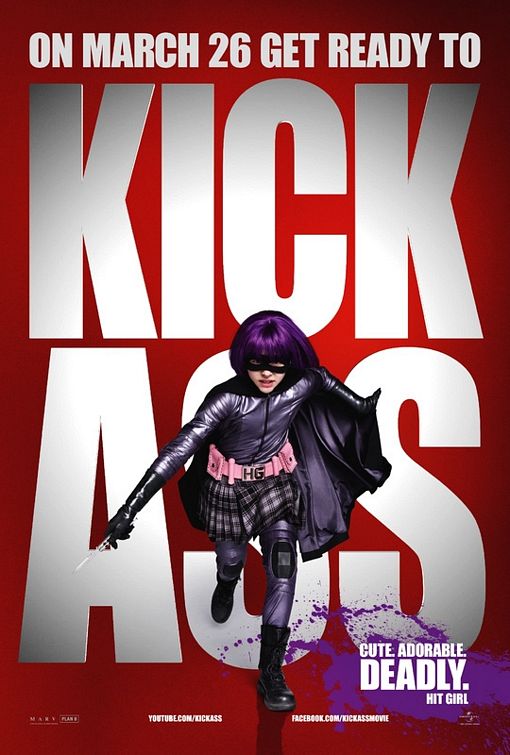
      Kick Ass Research

      Friday, 28 September 2012

      Kick Ass Box Office Figures

      Kick Ass International Advertisement


      Kick Ass TV spots


      Why Kick Ass is kicking but in DVD/Blu-ray sales

      Lionsgate announced yesterday that Kick Ass “proved dominant across all revenue channels this past week.” The film debuted in the number one position in DVD and Blu-ray sales – as well as the top movie download on iTunes since its release August 3rd.

      The critical success of kick ass hinted at the potential for excellent performance in home entertainment sales. While it wasn’t a huge surprise, for many of us, it offers a welcome sense of validation. Those of us who believed in the film’s potential for ‘cult’ success were rewarded with quantifiable proof this week.
      Last April, there was much ado about nothing with regard to the film’s “failure at the box office.” In fact, the film was only a “failure” when measured against the inflated projections for opening weekend numbers – numbers that were based on perceived “audience awareness.” What these projections failed to consider was that the perceived awareness was isolated to a powerful, but segmented, fraction of the population at large – meaning an improper sampling. The blogosphere often becomes a self-cannibalizing entity and the response to Kick Ass illustrates that trend beautifully.


      There was (an understandable) fan boy and girl fervor in anticipation of the film. One which lead credence to the notion that Kick Ass would strike it big opening weekend – and by big I mean projections forecast a $35 million open weekend – for a film that cost $25 million to make.

      There was also an enormous influx of trailers, videos, and other marketing materials prior to the release of the film – a tactic that could have backfired, positioning the audience to rail against a film – as a result of overexposure. When the film failed to perform as projected, the blogosphere (unsurprisingly) jumped at the opportunity to write a bunch of snarky articles outlining the film’s financial shortcomings. To put that in perspective – remember the film cost $25 million and went on to make $96 million worldwide.

      Kick Ass Red Mist DVD Blu-ray

      Here is what those projections failed to account for:
      1. As mentioned, the “audience awareness” sampling came from a community predisposed to be aware of, and interested in, a film like Kick Ass – as well as its source material. Without a recognizable name attached, or broader brand appeal, that awareness wasn’t representative of the general movie-going audience.
      2. Much of the target audience for Kick Ass was not old enough to take themselves to an R (hard R) rated movie, and this film is not an easy sell to parents. “Oh yes mom, can I please go see this film that features an adorable mass murdering twelve year old who makes liberal use of the ‘C’ word? Yep, it’s the very one Roger Ebert called ‘morally reprehensible’!”
      3. How hopelessly square Americans really can be (this feeds off of number two on the list). Now, don’t misunderstand, I like Roger Ebert. I don’t always agree with him, but I like him. However he asked in his review if his response to Kick Ass made him “hopelessly square.” My response is – yes, yes it does.
      4. Misinterpretation or rejection of the film’s central characters and story lines. Again this is a follow-up to number three on the list. I will use Mr. Ebert as the singular representative to a broad stick in the mud reaction to the film.
      Many felt that the film was morally bereft due to its depiction of an exquisitely violent little girl. Emphasis on little girl. I contend that Hit Girl’s gender played a powerful subconscious role in some people’s negative reactions to her. Further, people felt that the film lacked a broader social message. To that I would ask: What kind of message would you like? A lie? Would you like to be told that good triumphs over evil every time and all is really simple and neat in the end?

      Kick Ass Hit Girl Blu-ray DVD
      I would follow those questions up with another: Is a film under an obligation to deliver a standard ‘moral of the story’ which is easily digestible by all? An idea already broadly accepted that adds nothing new to our cultural discussion? Or can it not simply be tons of fun and wickedly entertaining? I did myself the favor of steering clear of all the videos released for Kick Ass prior to its open. As a result I was both delighted and surprised with Chloe Moretz. I found Hit Girl's action sequences alone enough to justify a trip to the movies.

      However, I would argue that the film does in fact have a moral and societal message. A very simple message perhaps, but a clear one imbued in every moment of the movie. The message is this: You, even you, ordinary, non special “regular Joe” you who is just like ordinary, “regular Joe,” non special me can do something – so why don’t you? Why do you, do we instead just sit back and watch?

      We see this in the character of Kick Ass himself. This perspective is clearly laid out in his “YouTube treatises,” but can also be seen in everything he tries, fails and succeeds at doing throughout the film. We see this theme play with Nick Cage as the  hilariously overzealous Big Daddy – crazy, but committed. We see this in Kick Ass’s love interest Katie who takes the more traditional social action route. We particularly see this in the character of the “bystander” who watches, but does nothing – and is eventually shot for it.

      Kick Ass Aaron Johnson DVD Blu-ray

      What Kick Ass does so beautifully is set itself up as a film that is going to be the “anti-comic book” movie, the one that breaks all the rules – and pokes fun at the accepted tropes of the genre. Then at a certain point (around the time of Big Daddy’s confrontation with his ex-partner) the film takes a turn and fulfills every aspect of a standard comic book tale. Kick Ass tells you it is making this turn by visually propelling us into the comic book world of Big Daddy’s creation. This is some fun and outstanding filmmaking.
      Kick Ass felt like a film that was destined to be misunderstood in its initial release and then appreciated by a large cult audience as time progressed. The kids who could not get their parents to take them to the movie can now buy the DVD. Those who balk at $10 in the theater seem okay with $15 spent on the more permanent DVD or $25 for a Blu-ray.

      “Word of mouth” has had a real chance to spread to the general population. Many “non-traditional” films have followed this same trajectory to cult film success. Some notable selections include; blade runner, Office Space, fight club, TV series would include firefly, freeks and geeks and Arrested development.

      Thursday, 27 September 2012

      Why Kick Ass succeeded at the Box Office

      This article was written by Cole Abaius and first appeared on Film School Rejects in 2010.

      Updated: Deadline is reporting that Kick-Ass actually won the week by a narrow margin of $19.8 million to $19.6 million for How to Train Your Dragon.

      I’m sitting in a giant echo-chamber of a movie theater complete with it’s old-style, curved panoramic screen and chairs that were ordered with gusto by someone in the 1950s. In the Century Park 16, tucked away from the rest of the bustling world in Tucson, Arizona, it’s no surprise that my afternoon screening of Kick-Ass is almost completely empty except for a trio of teens who are skipping school, a middle-aged man who’s slouched down in the back, and a couple that sneak in fifteen minutes into the action.
      There’s almost never a huge crowd there (which is part of why I love it), but the bad news for Matthew Vaughn and company is that the scene I witnessed was the norm, not an outlier.
      So now everybody is asking the proverbial question about how a movie with that much hype performs with such lackluster at the box office. After all, it came out with geeks screaming its praises from Butt-Numb-a-Thon, from South by Southwest, and from Austin in general. How could all of those positive reviews not lead to success?
      It’s fairly simple actually, but the first thing to remember is that Kick-Ass wasn’t a failure except at playing the expectations game. Let’s look at it in context:
      Kick-Ass is an indie film made for $30 million that just made $37 million world-wide by its U.S. opening weekend.
      Even with the average path a film takes through the theaters, the movie has already made its budget back, will make its advertising budget back by next weekend, and will ultimately be a financial success. It won’t be the smashing success that some predicted, but it will still be a success.
      Of course, those raw numbers don’t take into consideration the split between Lionsgate, the theaters, and the film’s producers, so technically the production team has not regained its original investment. However, a film (especially one with this type of budget) making an equitable number back on its opening weekend is a good sign that it will be on schedule to be a positive investment.
      People are shifting in their seats about sequel possibilities seeming out of reach now, which is a fine question to ask, but we’ll get to that after taking a look at why Kick-Ass didn’t explode out of the box.

      ‘R’ Does Not Stand For ‘Target Audience’
      The  film world does a metric ton of editorializing about the ratings system. In particularly, we talk a lot about how those secretive, old white people hurt the artistic process and the business model by slapping an R-rating on a film for seemingly arbitrary reasons. However, in the case of Kick-Ass, I think everyone can agree that it earned its R. Unfortunately, that rating doesn’t do well when your target audience is 14-year old boys. Those boys have a tough time getting into the theater without buying a ticket to How to Train Your Dragon.
      Am I saying that the numbers are inflated? Not exactly. I’ve always hated that argument because it’s so absolutely unprovable, but on the common sense level, I will make the bold claim that at least one whole ticket for the family fare ended up wandering into the wrong theater for some ultra-violence.
      Still, the ultimate obstacle there is creating a movie aimed at the younger set and then barring them from seeing it. It’s a simple case of conflicting goals – which is fine – especially considering that the filmmakers clearly weren’t making a film to maximize profits. Unfortunately, that’s a reality they’ll come face to face with over the course of the next few weeks.

      Conservative Groups Don’t Matter, Do They?
      Usually there is a boost in sales when people threaten to protest. The do-gooders and morality policemen often have the opposite effect by increasing awareness and interest in a project, so many people are confused that Kick-Ass might have been hurt by the attention instead of helped.
      The only reason I can come up with is pointing out that there were no protests.
      For all the screaming about controversy on the internet, there were no major parental organizations that planned or executed protests – at least not on any sort of large scale to have an effect. All of the controversy talk about violence and children saying naughty words seemed to come directly from the filmmakers. And, you know, Roger Ebert.
      In this case, conservative groups don’t matter because they weren’t ever really in the equation. Perhaps attempting to drum up controversy only alerted some who were planning on seeing it to the very type of film. Without some flustered parent making a jackass of himself on national news networks, the film didn’t have that organic boost that comes from people buying a ticket just to see what has the Christian League of Conservative Christians of America all knotted up.

      Then What About How to Train Your Dragon?
      It’s a nice tidy picture that a kid-friendly film launched back from the pack to beat the kid-friendly film with violence in it, but there’s no conspiracy here. Yes, How to Train Your Dragon moved from being 3rd back to 1st, but it also lost money. It also lost its #1 spot to a movie that got dragged through the mud upon opening (Clash of the Titans) and dropped all the way to 5th, and a comedy that is keeping a standard course in diminished ticket sales in its second week (Date Night). A simple look at the math from the previous weekend and this weekend shows that Dragon didn’t so much soar back into 1st as it limped past other films on a faster decline.
      Still, Kick-Ass failed to overtake it. It’s not a grand, conservative conspiracy, but the film earned every bit of its 2nd place finish.

      No Names
      The movie didn’t feature any big name talent (except for Nicolas Cage who didn’t happen to searching for any lost treasure), and that can definitely be a factor in breaking a movie beyond its built-in audience and out into the mainstream. This is a likely culprit, along with other factors, as to why the film didn’t bust right out of the gate.
      However, the reverse argument is also true in this case: a film with no known stars just made $20 million in one weekend.

      Accidental Marketing
      One other possible hypothesis is that Lionsgate just didn’t know how to market the film. There was a lot of red band material, but it was all shown to people already interested in going. Plus, most of the television spots all high-lighted the humor and camp which, some believe, led certain possible movie goers to think of it as a spoof along the lines of Superhero Movie (which opened with less than $10 million back in March of 2008).
      Yet again, another completely unprovable hypothesis. Plus, it’s one that sounds moronic considering that, yes, there was humor in the trailers but, no, it was miles away from anything in the spoof world. Even the casual television watcher could have seen a noticeable lack of Leslie Nielsen in the Kick-Ass trailer.
      Still, with that conspiracy theory unprovable, it still stands to reason that there was a failure in marketing here that was augmented by the challenge outlined earlier in selling a comic book movie to kids who won’t be allowed into the theaters without an adult.

      Will There Be a Sequel?
      I don’t know. I don’t know because I’m not Mark Millar or Matthew Vaughn. I’m sure that there are some conversations to have, but the important thing to remember here is that the film was actually a success at the box office. It wasn’t a huge success, it wasn’t the kind of success that people preached about, but based purely on the numbers, the film is in the money.
      As an indie film picked up for distribution from Lionsgate, it is in a unique position. This isn’t like Spider-Man where Sony had a target number and executives waiting to give the go-ahead based on ROI. This is a film that is in its own driver’s seat. That driver’s seat might be occupied by Lionsgate now, but all the talk about the film failing or not deserving a sequel is a bit absurd.
      If there’s a fan base there, and if the production cost can be kept low, and if the artists want to see what else they can do with the material, and if Chloe Moretz thinks of something more offensive to say, then I don’t see why there wouldn’t be a sequel. And all of those seem well within the realm of the possible. Especially the part about Moretz. I hear she can curse like a sailor.
      To every geek out there slapping his or her forehead, and for everyone currently wringing their hands about whether a sequel will be made, please take a deep breath. Count to ten. Take a ride on your jet pack. Kick-Ass was a success even if it doesn’t exactly feel that way.

      Editor’s Note: This piece has been updated from its original format to clarify on the concept of making the budget back.

      Kick Ass Teasers & Trailers


      Kick Ass (The Idea)


      Kick-Ass is a creator-owned comic book series written by Mark Millar and illustrated by John Romita, Jr. It is published by Marvel Comics under the company's Icon imprint.
      It is the story of Dave Lizewski, a teenager who sets out to become a real life superhero. His actions are publicized on the Internet and inspire others. He gets caught up with ruthless vigilantes Hit-Girl and Big Daddy who are on a mission to take down the gangster John Genovese.

      The Big Six


      Major Film Studios

      A major film studio is a film producer and production company that releases a substantial number of films annually.
      The Big Six film studios are:
      1. Warner Bros. Pictures. Comprising a whopping 19.7 percent of the US/Canadian market share (2007 figures), Warner Bros. Pictures is the biggest player in the film industry. Securing the rights to major films like Harry Potter, Superman, Batman, The Matrix and Star Wars have made Warner Bros. the No. 1 name in the business.

      2. Paramount Pictures. With 15.5 percent of the US/Canadian market share (2007 figures), Paramount Pictures continues to be one of the most successful film production companies in the world. Star Trek, War of the Worlds, the Mission Impossible series, Transformers and Tropic Thunder are just a few of the popular films produced by Paramount Pictures.

      3. Walt Disney. One of the most renowned film production companies in the history of the business, Walt Disney now holds 15.3 percent of the US/Canadian market share (2007 figures). With highly successful movies like Pirates of the Caribbean, National Treasure, Meet the Robinsons and Enchanted, there's no doubt that Disney will continue to play a key role in the industry for years to come.

      4. Columbia Pictures. Comprising 12.9 percent of the US/Canadian market share (2007 figures), Columbia Pictures remains a big player in the business. Some of this company's recent successes include Casino Royale, The Da Vinci Code, the Spider-Man series and Step Brothers.

      5. Universal Studios. 12.2 percent of the US/Canadian market share (2007 figures) belongs to Universal Studios, which continues to make millions for the film industry. With major hits like the Bourne series (Bourne Identity, Bourne Supremacy and Bourne Ultimatum), The American Pie series, Knocked Up, American Gangster and The Incredible Hulk, it's very clear that Universal Studios knows what it takes to make money in this industry.

      6. 20th Century Fox. Also known as "Twentieth Century Fox," this highly successful movie production company makes up 11.9 percent of the US/Canadian market share (2007 figures). Some of the biggest and most successful movies from this empire include the X-Men series, Mr. and Mrs. Smith, Star Wars Episodes II and III, and the Fantastic Four.

      Four quadrant picture

      A Four Quadrant Picture is a marketing term used to describe a film targeted to all audience quadrants: men over 25, men under 25, women over 25, women under 25.

      Usage
      In the movie business, and it is most definitely a business, everyone is looking to maximize the audience for their picture. A four-quadrant picture is that magical type of film that attracts parents and kids, men and women, and brings in huge amounts of revenue on opening weekend. In the term “four-quadrant,” the quadrants refer to gender (male and female) and age (under 25 and over 25).
      For most studios, the goal is to get enough details to line up so that they have broad-based, family-friendly appeal in designing a blockbuster or four-quadrant film. An important aspect of getting that appeal is the ratings system. An 18 Rating can be the kiss of death for a studio trying to market a film featuring pre-teen characters. A lowering from PG-13 to PG can mean millions more in revenue as parents feel more comfortable bringing young children to a given film like Evan Almighty.

      Examples
      One of the most famous four-quadrant, blockbuster films is Star Wars and all of its sequels. Jaws is another landmark blockbuster film. Other more current examples include Night at the Museum, Journey to the Center of the Earth, Shrek (1-3), Spiderman (1-3), Pirates of the Caribbean (1-3), andWall-E.

      Implications
      Another interesting by-product of the rise of four-quadrant films in the industry is cross marketing. Those films often are associated with toys and other products that both advertise the film and bring in revenue on their own. In addition, four-quadrant films are powerful vehicles for product placement advertisers looking to show their wares to the largest audience possible.
      On the down side, many wonder how much effort is placed on credible, engaging story lines as opposed to marketing opportunities in these behemoth cinematic endeavors.

      Above the line & below the line advertising


      'Above The Line' is a type of advertising through media such as television, cinema, radio, print, web banners and web search engines to promote brands. This type of communication is conventional in nature and is considered impersonal to customers.

      'Below The Line' is efficient and cost-effective for targeting a limited and specific group. This can take the form of tie in's with other products and companies.

      Monday, 24 September 2012

      Attack the Block review

      Attack the Block is a sci-fi thriller film but involves a bit of every genre. This film has action in abundance, which keeps you on the edge of your seat, or falling off your seat in my case. Comedy is also involved in this film as the characters are very humorous, the humor used was the type I like.They did not use too much so it didn't take away from the scary feel to the movie. I feel that the mixture of genres is a good thing so it is not pigeonholed into one genre bringing in more customers.

      I feel that the small budget helped the film as they could not afford all big actors so they had to discover new actors. I feel this is a good thing because we gain a link with the characters and we see them as that character only. The acting was of high class, every actor played their part perfectly, especially Brewis I feel that he acts his character very well as he often has to act stoned and looks real, not put on. However the lack of money affected the film as they were not aloud to use the technology necessary. The monsters the company created looked very amateur which took a bit away from the film, but they still managed to scare me.


      I feel that the story line was very interesting as it made us get a connection with the bad characters in the film, it also kept me glued to the screen throughout the film. We also learn that there is a good person in everyone, for example Moses is seen as a hero in the end, when at the start of the film he robbed someone.

      Overall I feel that Attack the Block is a very good movie that interested me throughout, however I feel that with a little more of a budget they could improve it with more realistic monsters and effects. I would give this film a 4/5 rating.


      Friday, 14 September 2012

      Attack the block case study


      Attack the block is a film that was released in 2011, the film was written and directed by Joe Cornish, he is the man behind the story and I'm going to explore why and how he directed the film.

      Joe Cornish got his inspiration from films in the 80's like 'E.T', 'Gremlins' and 'streets of fire'. However he had never seen an alien sort story produced in a sub urban area, where he came from. So he mixed the films he loved with the area he lived in making it unique.

      The main problem with the films production was that there was a low budget meaning they could not use all the technology they wanted like the 3D CGI. So they resorted to CGI to remove certain things so that may of helped the film as it would make it more real.

      The directors felt that too many films are using big names in films not allowing young talent to come through and prove themselves. So they had auditions for people around the age of 16. From this they had 11 people aged 16 or younger playing the main parts in the film, allowing there careers as actors to develop. The directors also felt that to  much technology is being used in todays films so they went old school and used classic methods, which lowered cost and showed that these methods were still as good as the newer methods. The problem they felt with the new technology is that you didn't know when editing stopped and reality started.

      For the soundtrack they was produced by the popular electronic dance music group 'Basement Jaxx' they did 20 songs for the whole film this suited the film, because it is a sub urban area where they listen to dance music or hip-hop.

      They advertised the movie by doing TV AD's this would have drawn customers in. Another way was by releasing merchandise like posters and clothing this would advertise the movie by spreading the name. Directors and actors also did interviews to promote and persuade people to go view their movie.